
Enthusiastic about Axial Flow Fan? 10 Explanation why It is time to Ce…
페이지 정보

본문
 9. Noise Reduction Strategies in High-Speed Axial Fan Design
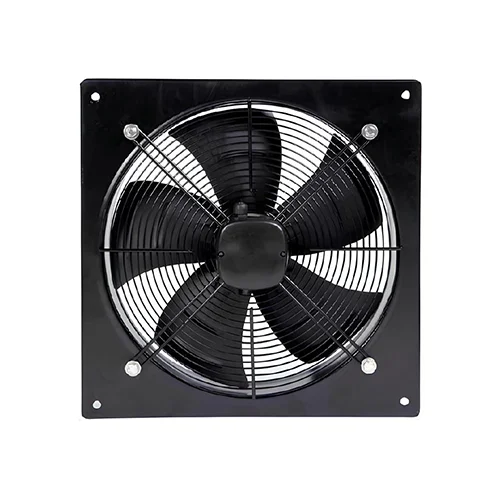
axial supplier fans ventilation, particularly high-speed or high-pressure models, are inherently prone to generating noise, which presents a significant engineering challenge in commercial and industrial applications[12][18]. Fan noise is broadly categorized into two types: rotational (tonal) noise and broadband (turbulence) noise[17]. Rotational noise is caused by the regular passage of the blades past stationary components (like motor struts or guide vanes) and is heard as a distinct tone, related to the Blade Passing Frequency (BPF)[17]. Broadband noise is caused by random flow turbulence, such as air separation from the blade surface, tip vortex shedding, and turbulence in the incoming air[17]. Modern noise reduction strategies focus heavily on manipulating the blade geometry[4][17]. Blade sweep and skew—the backward curving of the blade—is one of the most effective methods, as it spreads the pressure pulse of the blade passing frequency over a longer time, reducing the tonal noise's intensity[15][17]. Varying the number of blades or using an odd number can also break up harmonic frequencies, reducing the perceived noise[5]. Furthermore, minimizing the tip clearance between the blade and the housing reduces tip-leakage flow, a major source of turbulence noise[17]. Acoustic enclosures and sound attenuators are often applied externally, but the most sophisticated noise control is achieved internally through highly optimized, aeroacoustically designed blade geometry, ensuring the fan moves air efficiently while meeting increasingly strict occupational and environmental noise regulations.
 DC Cross Flow Fan Manufacturer: OEM & ODM Uniform Airflow Solutions | DC FAN SUPPLY
axial fan
- 이전글Why Disulfiram Is The Only Skill You Really Need 25.12.17
- 다음글เลือกซื้อจอ LED ยังไงให้คุ้มราคา 25.12.17
댓글목록
등록된 댓글이 없습니다.